
How Medical Supply Courier Services Help Hospitals Avoid Critical Inventory Shortages
The modern healthcare supply chain leaves very little room for error. When a hospital experiences an unexpected surge in patients, an unavailable medical supply courier can spell the difference between a seamless procedure and a critical supply shortage. Traditional delivery services simply cannot match the precision required to transport life-saving equipment and delicate laboratory items.
Preventing inventory depletion requires absolute operational accountability and a deep understanding of final-mile logistics. This article explores how specialized medical couriers resolve common distribution vulnerabilities, safeguard temperature-sensitive cargo, and maintain predictable stock levels during supply chain disruptions.
Eliminating Midnight Shortage With After-Hours Logistics
Hospital operations do not pause at closing time, yet traditional delivery services often leave healthcare facilities stranded outside of standard business hours. When a critical shortage occurs during the night shift, relying on an on-call medical supply courier ensures that life-saving equipment and urgent restocks are delivered without delay. Dedicated regional networks maintain 24/7 routing to absorb these exact operational spikes when time is the most critical factor.
Procurement managers utilize overnight logistics to address several immediate inventory vulnerabilities, such as:
Emergency Restocks. Deploying urgent replacement devices or surgical kits directly to the operating room floor.
Off-Peak Distribution. Moving bulk supplies between regional warehouses and hospitals when traffic congestion is lowest.
On-Demand Laboratory Transfers. Transporting time-sensitive diagnostic components to ensure results are ready by morning rounds.
Maintaining a continuous logistical loop prevents the morning administrative bottleneck that frequently disrupts patient care schedules.
Preserving Temperature-Sensitive Medical Goods
A specialized medical supply courier understands that a single compromised cold-chain delivery creates an immediate, costly inventory shortage of critical items like oncology medications or vaccines. Securing these delicate transit pathways requires seasoned driver professionalism and strict handling procedures tailored to specific clinical requirements.

Protecting these vital healthcare assets involves several operational safeguards:
Continuous Thermal Monitoring. Utilizing calibrated containment to maintain specific ambient environments for items such as blood plasma and biologics throughout transit.
Final-Mile Precision. Minimizing exposure risks during the critical transition of chilled pharmaceuticals from the delivery vehicle to the hospital storage room.
Proactive Route Planning. Optimizing travel times to ensure sensitive items like laboratory reagents spend the absolute minimum duration in transit.
Rapid Cross-Dock Dispensation. Ensuring temperature-sensitive orthopedic implants or specialized tissue samples never sit idle in unconditioned loading zones.
Pre-Conditioned Equipment Protocols. Deploying active cooling storage units that are stabilized prior to loading to prevent thermal shock to live cultures.
Relying on standardized carriers for temperature controlled shipping introduces unacceptable risks to specimen integrity and pharmaceutical stability. Working with a dedicated regional transport specialist ensures that high-value, climate-sensitive goods arrive fully viable and ready for immediate clinical use.
Bypassing Broad Supply Chain Bottlenecks
When global or national freight channels clog, massive distribution hubs become logistical dead ends that delay critical medical shipments. Specialized transport for healthcare industries allow local hospital networks to isolate themselves from macro-level port and rail delays. Relying on fixed, adaptable routing ensures that your regional pipeline remains active even when major national carriers experience widespread network delays.
Utilizing a flexible regional medical supply courier offers concrete ways to circumvent macro supply chain bottlenecks:
Dedicated Lane Management. Establishing direct regional transit lanes that completely bypass congested national sorting hubs via.
Point-to-Point Hot Shots. Using direct, uninterrupted courier runs for medical equipment distributors who need to pull stock from nearby secondary warehouses immediately.
Dynamic Port Diversions. Intercepting delayed shipments at regional transit points and transferring them to agile delivery fleets for immediate hospital delivery.
Enabling Granular Tracking of Your Medical Supply Courier
Inventory blind spots introduce significant vulnerability to healthcare supply chains, frequently leading to unnecessary re-orders and unexpected shortages. When an inventory manager cannot locate an incoming shipment, the facility is forced to operate reactively rather than proactively. Taking advantage of a dedicated medical supply courier eliminates this administrative uncertainty by providing absolute operational transparency from the origin warehouse to the hospital receiving dock.
Real-time visibility allows procurement teams to manage incoming stock with precision through several key capabilities:
Proactive Status Alerts. Receiving automated notifications the moment a courier encounters transit anomalies, allowing staff to adjust clinical schedules early.
Precise Arrival Windows. Accessing exact arrival timelines so receiving staff are positioned to accept and store sensitive medical cargo without loading dock delays.
Instant Digital Verification. Using electronic proof of delivery to confirm exactly which department accepted the medical assets, removing any internal tracing guesswork.
Minimizing On-Site Storage Overhead
Modern healthcare facilities frequently operate on lean, just-in-time inventory strategies to maximize square footage for patient care rather than bulk storage. Running a lean operation requires a highly reliable medical supply courier to synchronize daily restocks perfectly with hospital consumption rates. Any delay in this frequent delivery cycle instantly exposes the hospital to sudden stock depletions of essential clinical items.
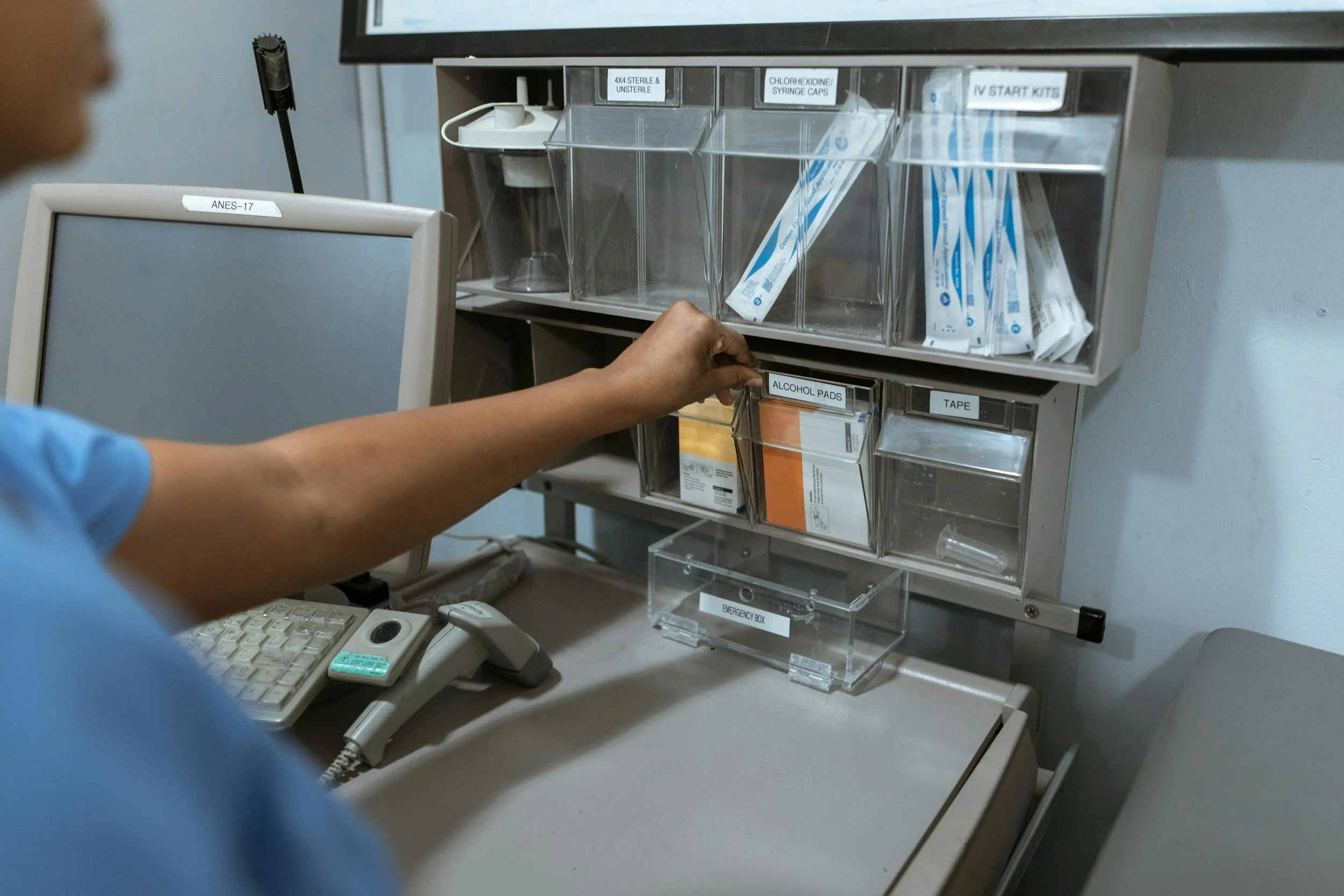
Maintaining minimal on-site inventory overhead safely relies on specific transport mechanisms:
High-Frequency Replenishment. Scheduling multiple, predictable deliveries throughout the week to match real-time surgical and clinical utilization rates.
Direct-to-Department Delivery. Moving critical restocks past the central loading dock straight to specific floors, enhancing overall distribution efficiency.
Scalable Fleet Access. Utilizing an adaptable courier fleet to handle sudden spikes in patient volume without needing to store emergency safety stock on-site.
Rely on a Medical Supply Courier for Your Healthcare Facility
Securing a medical supply chain against unpredictable shortages requires a dependable partner like 24/7 Enterprises. Specializing in final-mile, dedicated route, and after-hours logistics, we deliver the operational accountability, driver professionalism, and regional focus needed to maintain absolute supply consistency. Our specialized medical supply courier services insulate healthcare networks from distribution bottlenecks while safeguarding sensitive assets.
Partner with us at 24/7 Enterprises today to streamline your medical logistics and guarantee that critical hospital inventory always arrives on time.